Many businesses are already using AI to help prepare for strategy workshops. Competitor analysis, market scanning, customer segmentation and pricing research is all work that used to take days/weeks that can now take hours.
AI helps create valuable insights and analysis that can assist leaders prepare more effectively and walk into a workshop session better placed than ever.
Solid strategy documents are essential to have, and if we can spend less time assembling the basics it means more time for the questions that really matter.
What’s actually happening in our market?
Where are we making money?
Which of our assumptions no longer hold?
What are we going to prioritise and why?
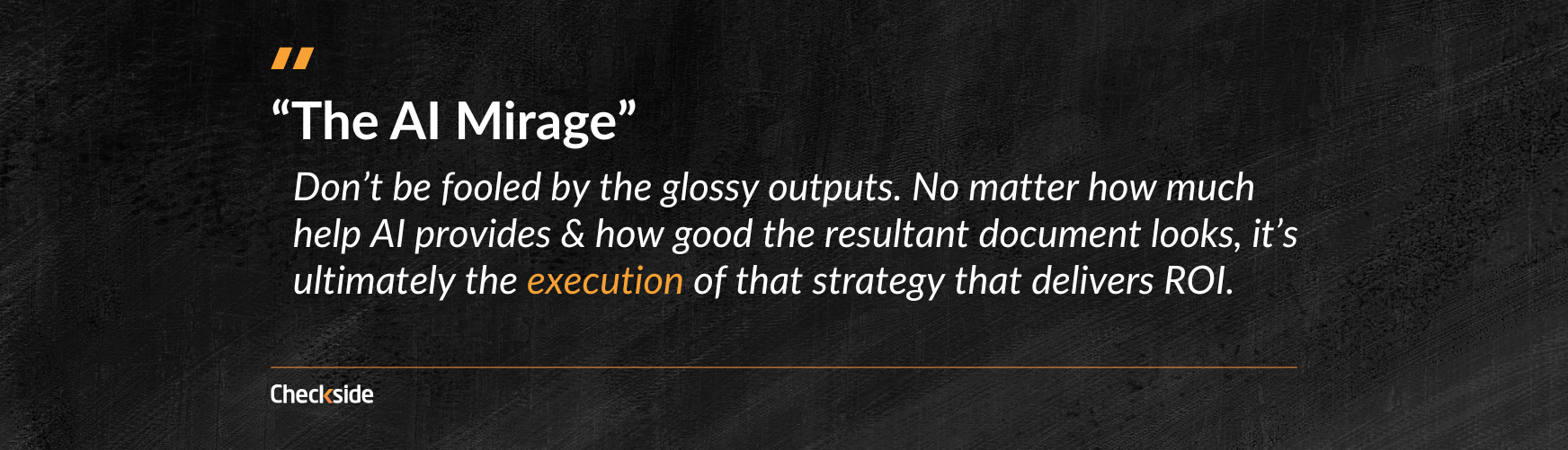
Whilst AI can be helpful in producing nice, shiny documents more efficiently, this continues to ignore the elephant that’s still in the room….strategy execution is the key issue.
Better Preparation Isn’t Better Execution
Better preparation for and output from strategy days is certainly helpful and there’s definitely an art to a good strategy development process, but the ultimate lack of traction around strategy usually arises because Monday comes around and everyone gets busy again. The real question is “busy doing what”? Most times it’s operationally focused rather than strategically important.
Rarely is it a crisis or market shock that creates this disconnect, but rather the constant weight of running a growing business. All too often we see leadership teams walk out of workshops aligned and energised only to see that six weeks later they’re back in the same operational meetings, having the same conversations and getting pulled towards the same short-term problems as always.
The strategy didn’t get abandoned. It actually got swamped and outcompeted by everything that felt more urgent. It’s a classic “urgent vs important” challenge.
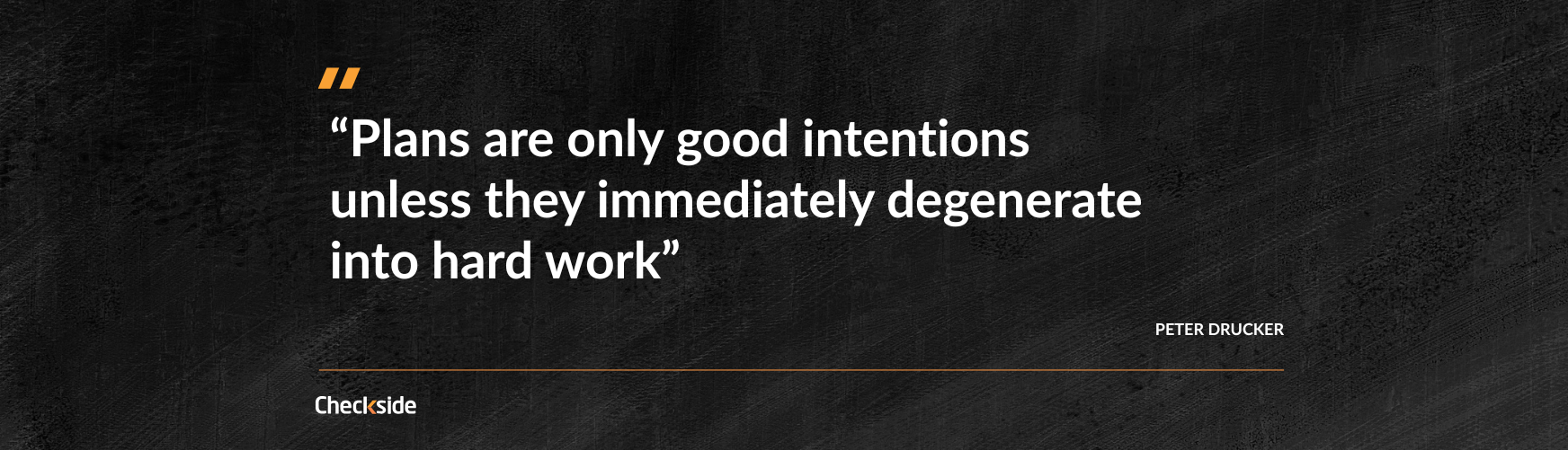
That’s a big part of the execution problem – and a better strategy development process and shiny strategic document won’t solve the issue. A well-developed strategy is still important but in terms of generating outcomes for your business, it’s really just a ticket to the game.
Strategy Execution Drives ROI
Whilst AI can definitely help businesses to build better strategies and deliver polished documents, one question matters more than ever: how does the strategy get delivered?
This is where businesses can benefit from better operating systems to drive focus and accountability. Objectives need to be clear and prioritised, priorities need owners and owners need clear measures. Strategic progress also needs regular review. This cocktail of focus and rhythm means important problems get surfaced early and addressed before they drift too far. For most mid-market businesses this kind of structure and rhythm prevents the important things being buried by the urgent ones.
Without it, even a well-built strategy ends up struggling for oxygen amongst the daily “busyness” of work.
The transition from strategy development to execution is the most overlooked part of the whole process. Developing an effective operating system to support the execution of a developed strategy is vital. It’s also the critical bridge between what a leadership team decides is important (strategy development) and what the business actually delivers (strategy execution).
The businesses that get the most out of their strategy won’t be the ones with the most detailed or polished plan that’s been developed with the support of AI. They’ll be the ones who think more clearly and build the execution rhythm that turns that thinking into results.
How Checkside Helps
We work with business owners and CEOs to build the execution rhythm that turns strategy into results.
Through our High Performance Operating System and Monthly Accountability Meetings, we help leadership teams hold their focus and keep progress consistent.
If any of this sounds like a valuable outcome you’d like to pursue, let’s have a conversation.
We see it all the time. Business owners and CEOs are often clear on the vision – but the real challenge is execution. Big plans start strong, then lose momentum as priorities shift, teams drift into silos, or the metrics being tracked don’t clearly tie back to outcomes being sought. What makes the difference isn’t […]
What is your process to prepare for FY24? What role does strategy play? Is strategy a process, a constant state-of-mind, a rhythm and a roadmap that unites your organisation around a common purpose, set of plans and moments to celebrate or re-evaluate progress?
Turning intent into action that sticks When a team feels stuck, progress slows or priorities drift, it’s tempting to think the strategy is wrong. More often the issue isn’t the plan. It’s the execution. Execution is where strategy lives or dies. At Checkside we see teams grow stronger when they build the discipline to follow […]