Adaptive strategy – focus on learning and application to accelerate your performance through uncertainty
2min Read
18 May 2020
Living Online
The changing landscape has led to an increased need for businesses to assess the status quo and update their business model quickly. As a result, the required skills and optimal mix of talent are changing, and as McKinsey & Co outlined in their recent article ‘To emerge stronger from the COVID-19 crisis companies should start reskilling their workforces now’, companies are facing a steep learning curve coupled with an accelerating need to enhance the capability of their talent pools.
McKinsey have highlighted six steps to building skills and business competency:
Strategy Development:
Rapidly identify the skills your recovery business model depends on. For example only 1% of doctor appointments were via telehealth in 2019 versus 93% currently
Build employee skills critical to your new business model. Need more ability to operate in the digital world, stronger cognitive capability to respond to redesign and innovation and more resilience and adaptability to cope with evolving situations
Launch tailored learning journeys to close critical skill gaps. Upskill your workforce for the new skills required to meet your revised strategy
Strategy Execution:
Start now, test rapidly and iterate – 91% of those companies that don’t start or wait to reskill will be either average or left behind when it comes to dealing with the next disruption
Act like a small company to have a big impact – make bold moves based on clear views of what you need and be prepared to fail
Protect learning budgets (or regret the deferral of investment later) and leverage ready-made solutions and IP of external providers
In line with these views, we have been helping clients test and reset strategies over the last few months, whilst increasing the cadence of operating rhythms and focusing on continuous learning and application of new skills. This ‘adaptive strategy’ approach is a necessity in uncertain times, but also will help businesses evolve over the longer term.
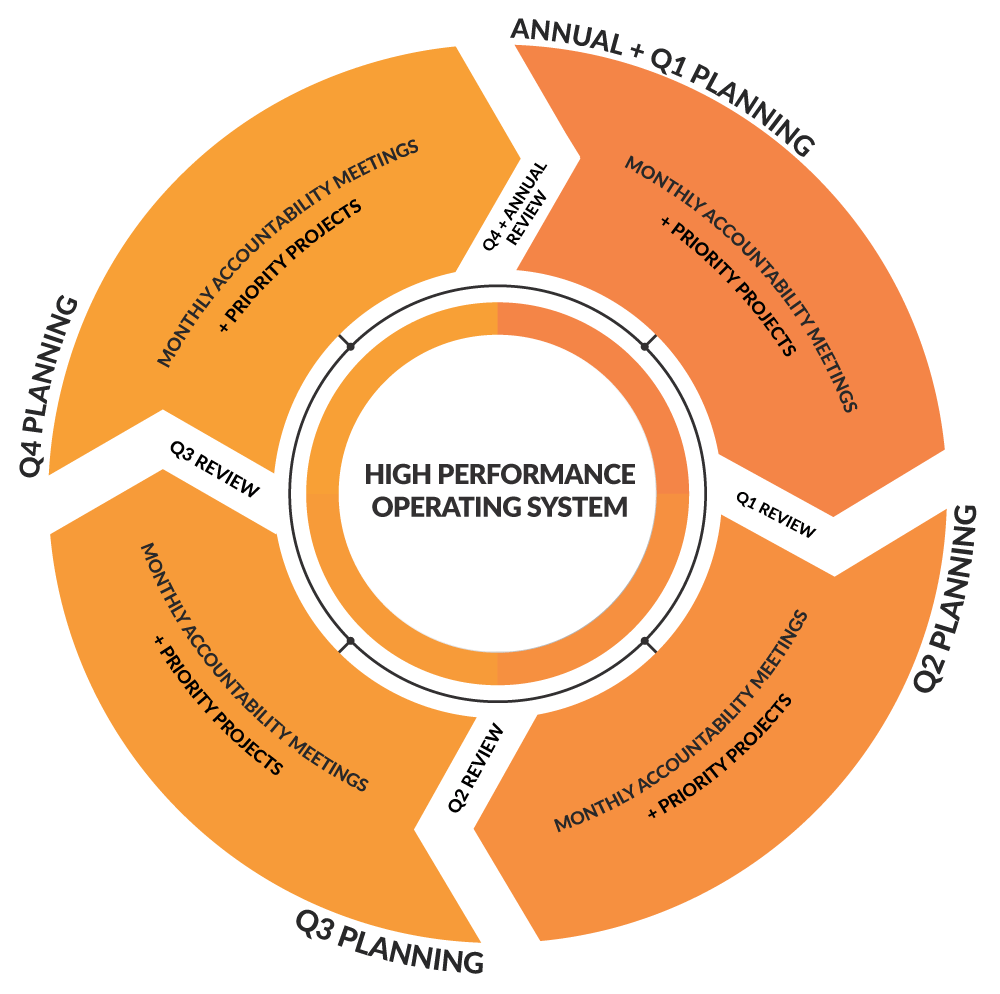
Of course, the execution component and (effective application of learning) remains the most challenging element for mid-market and emerging companies – and highlights the need for a High Performance Framework and Operating System to underpin your adaptive strategy .
By bringing together the elements of strategy iteration, leadership development, and performance improvement into a tight operating rhythm, you will be well set to outperform the market through 2020 and beyond.
To read the full McKinsey article please click here.
Warren Buffett once said the difference between successful people and really successful people is that the latter say “no” to almost everything. The teams that make the most progress aren’t necessarily the busiest. They’re not chasing every new initiative or reacting to every opportunity. Instead, they’re clear about what matters most – and they protect […]
We see it all the time. Business owners and CEOs are often clear on the vision – but the real challenge is execution. Big plans start strong, then lose momentum as priorities shift, teams drift into silos, or the metrics being tracked don’t clearly tie back to outcomes being sought. What makes the difference isn’t […]